
Play Therapy and Grief: Why Dolls, Toys and Pretend Play Help Children Heal
Why play works
Ask a grieving child directly how they're feeling and you will often get a shrug, a "fine," or silence. Ask that same child to show you what's happening in their pretend world of dolls, animals, or toy figures, and something very different can emerge.
This is the whole idea behind play therapy. For young children, play is language. Children don't yet have the vocabulary, abstract thinking, or emotional regulation to sit down and talk through grief the way an adult might in a counselling session. What they do have is an enormous, natural fluency in play. That fluency becomes the way big,
hard-to-name feelings get worked through. Play gives a child distance from a feeling that might otherwise be too overwhelming to face directly. It's much easier for a child to say "the teddy is sad because his grandpa died" than "I am sad because my grandpa died." The story is one step removed, which paradoxically makes it safer to get close to.
How it works with dolls and toys
Re-enacting and processing events: Children often use dolls or figures to replay parts of what happened. A hospital visit, a funeral, a goodbye, sometimes over and over. This isn't a sign something is wrong. Repetition is often how children process and gradually make sense of an overwhelming event working through it a little more each time.
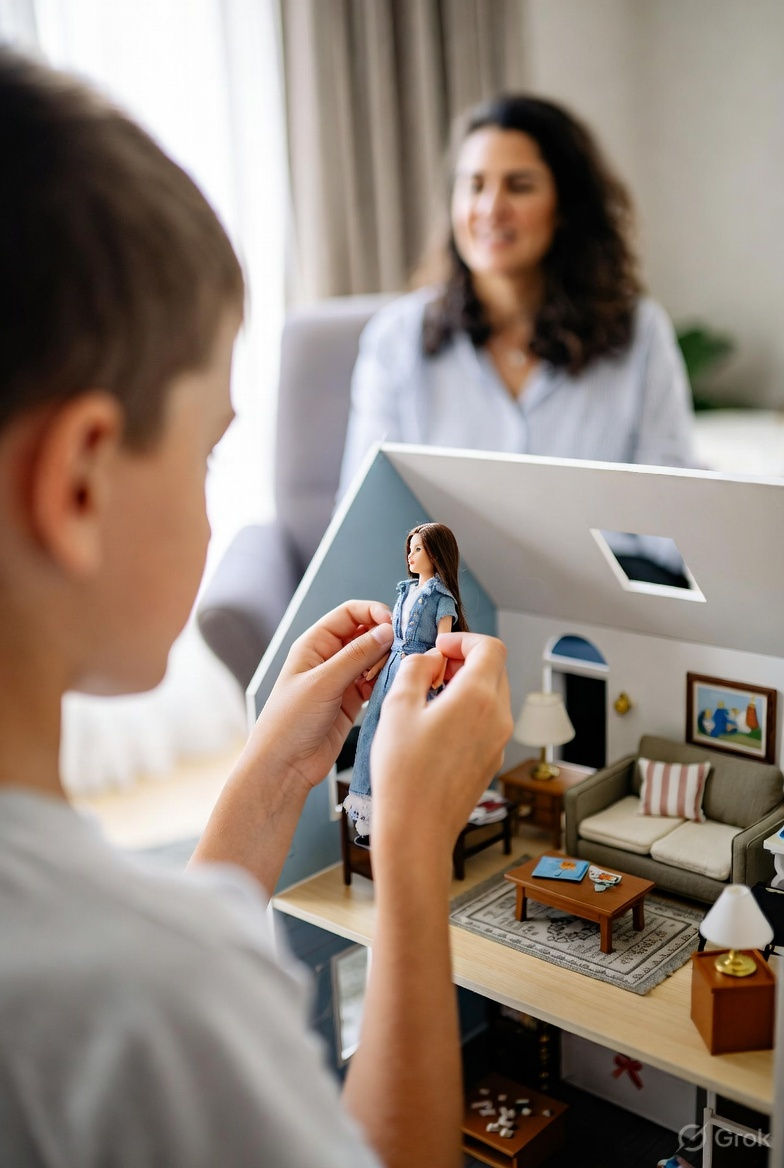
Externalising feelings: A doll or toy can carry emotions a child isn't ready to claim directly. "The bear is really angry" is often easier to say and easier for a child to sit with than "I am really angry." Over time, this externalised expression often helps a child recognise and eventually own those feelings more directly.
Exploring "what if" and other unanswered questions: Pretend play lets a child act out scenarios they can't ask about directly. Things like what happens after death, whether the person is safe, whether they'll see them again in some form. Watching (or gently joining) this play can give adults real insight into what a child is actually wondering or worried about, which isn't always what you'd expect.
Rehearsing comfort and control: Children often use dolls to comfort each other in play eg. tucking a toy in, "telling" it everything will be okay. This is a child practising self-soothing and regaining a sense of control at a time when so much has felt out of their hands.
How parents and carers can support this at home
You don't need formal training to offer supportive play at home, you just need to follow the child's lead and resist the urge to direct or correct.
Provide open-ended toys. A family of dolls or figures, a dollhouse, soft animals, or simple figurines work better than toys with a fixed "story," since they leave room for the child to bring their own.
Follow, don't lead. If a child starts playing out something related to their loss, the most helpful thing an adult can usually do is join gently, if invited, and let the child direct the story. Resist correcting details or steering it toward a "nicer" ending.
Narrate what you notice, without interpreting too much. A simple "the little bear looks really sad right now" can open a door, without putting words in the child's mouth about what it means.
Let repetition happen. If a child replays the same scene many times, that's usually the play doing its job, not a sign to stop or redirect.
Know when to bring in a professional. Play at home is a wonderful everyday support, but a registered play therapist is trained to work with more intense or stuck grief responses such as persistent nightmares, ongoing regression, ongoing distress that isn't easing over time. If a child's grief seems to be stuck rather than gradually softening, a referral to a play therapist or child psychologist is worth considering.
The bigger picture
Play isn't a distraction from grief, and it isn't a child "avoiding" the topic when they'd rather set up a tea party for their toys than talk directly about loss. For most children, play is the conversation, just conducted in a language built entirely out of dolls, stories, and pretend worlds. Making space for that kind of play, rather than only looking for grief to show up in words, is often one of the most supportive things a parent, educator or carer can offer.


Comments